Smart Inventory & Procurement Platform
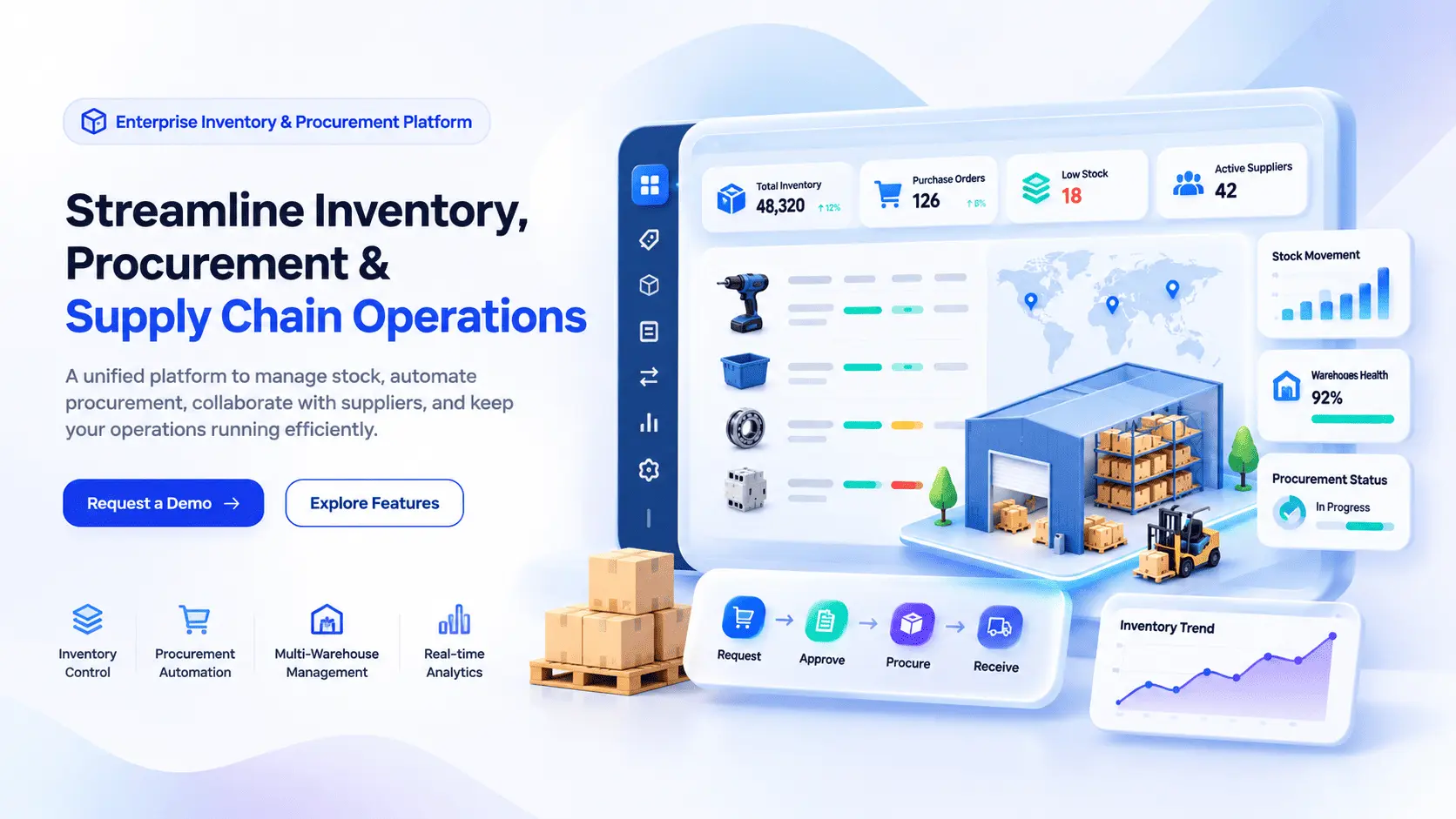
Managing Products, Purchases, Stock, and Orders Through One Business Application
A purchase transaction creates records. An incoming shipment adds another set of details. Warehouse teams need to account for received quantities, while sales teams need to know what stock is available before processing orders.
Rushkar Technologies developed a custom inventory and procurement management platform to bring these activities into one web-based application.
The system covers product management, purchasing, invoice payments, shipment records, stock handling, and order processing. It also gives administrators, sales staff, and warehouse personnel access to the functions they need.
Key Capabilities : Product Management, Procurement, Invoice & Payment Tracking, Inventory Management, Warehouse Operations, Shipment Management, Order Processing
Project Snapshot
| Category |
Details |
| Project Name |
Smart Inventory & Procurement Platform |
| Industry |
Enterprise Operations |
| Project Type |
Custom Inventory & Procurement Software |
| Application |
Web-Based Management Platform |
| Backend |
.NET |
| Database |
Microsoft SQL Server |
| Cloud Infrastructure |
Microsoft Azure |
| File Storage |
Azure Blob Storage |
| Authentication |
JWT |
| Authorization |
Role-Based Access Control |
| Integrations |
Mailgun, Twilio, Firebase Cloud Messaging |
Project Overview
Developing a Centralized System for Everyday Business Operations
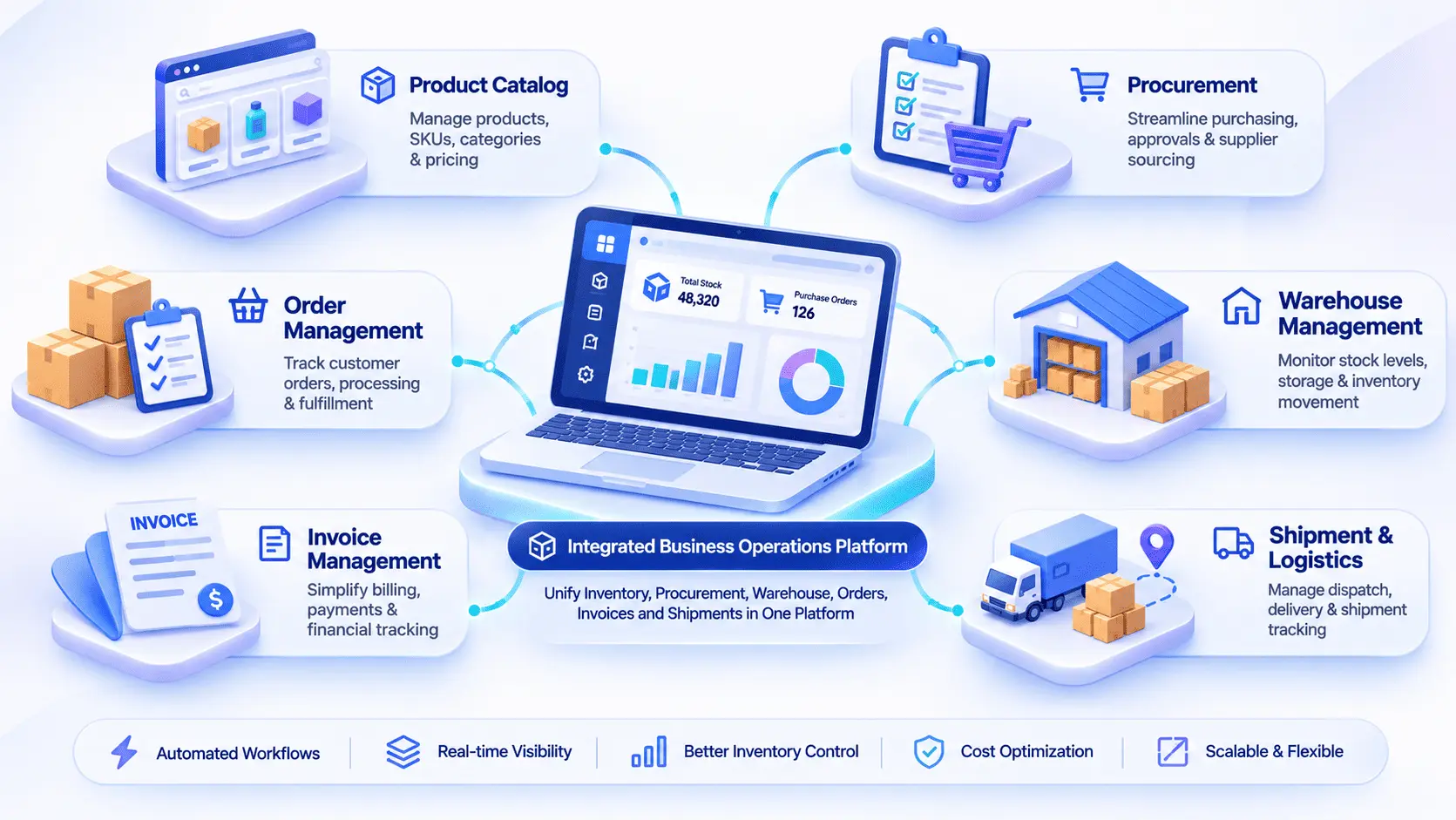
The project involved building a management application that could handle several connected business activities without separating their records across different systems.
We approached the project through our custom software development services, focusing on the business's specific inventory, purchasing, and order management requirements.
The business needed to maintain product information, manage purchases, record invoices, follow payments, monitor shipments, and keep track of warehouse stock. Order processing also needed access to product and inventory information.
Each activity had its own requirements. A purchase record needed to be associated with the relevant company or factory and invoice. An invoice needed payment information. Shipment records needed to show loaded, received, and pending quantities. Warehouse users needed to maintain stock entries and counts. Sales users needed product availability information when creating orders.
We developed the platform around these requirements.
The application includes separate modules for each operational activity, with common product and business records supporting their work. Administrators can review information across the system, while sales and warehouse users work with their assigned functions.
The objective was to create a practical inventory and procurement management system that could support daily operations without making users switch between unrelated records.
Project Objectives
Maintain product details and master information centrally.
Organize purchase transactions and related invoices.
Record invoice payments and outstanding balances.
Track shipment quantities and pending goods.
Maintain warehouse stock and physical stock-count records.
Identify low-stock and slow-moving products.
Support order creation and status management.
Provide different permissions to administrators, sales, and warehouse teams.
Business Challenges
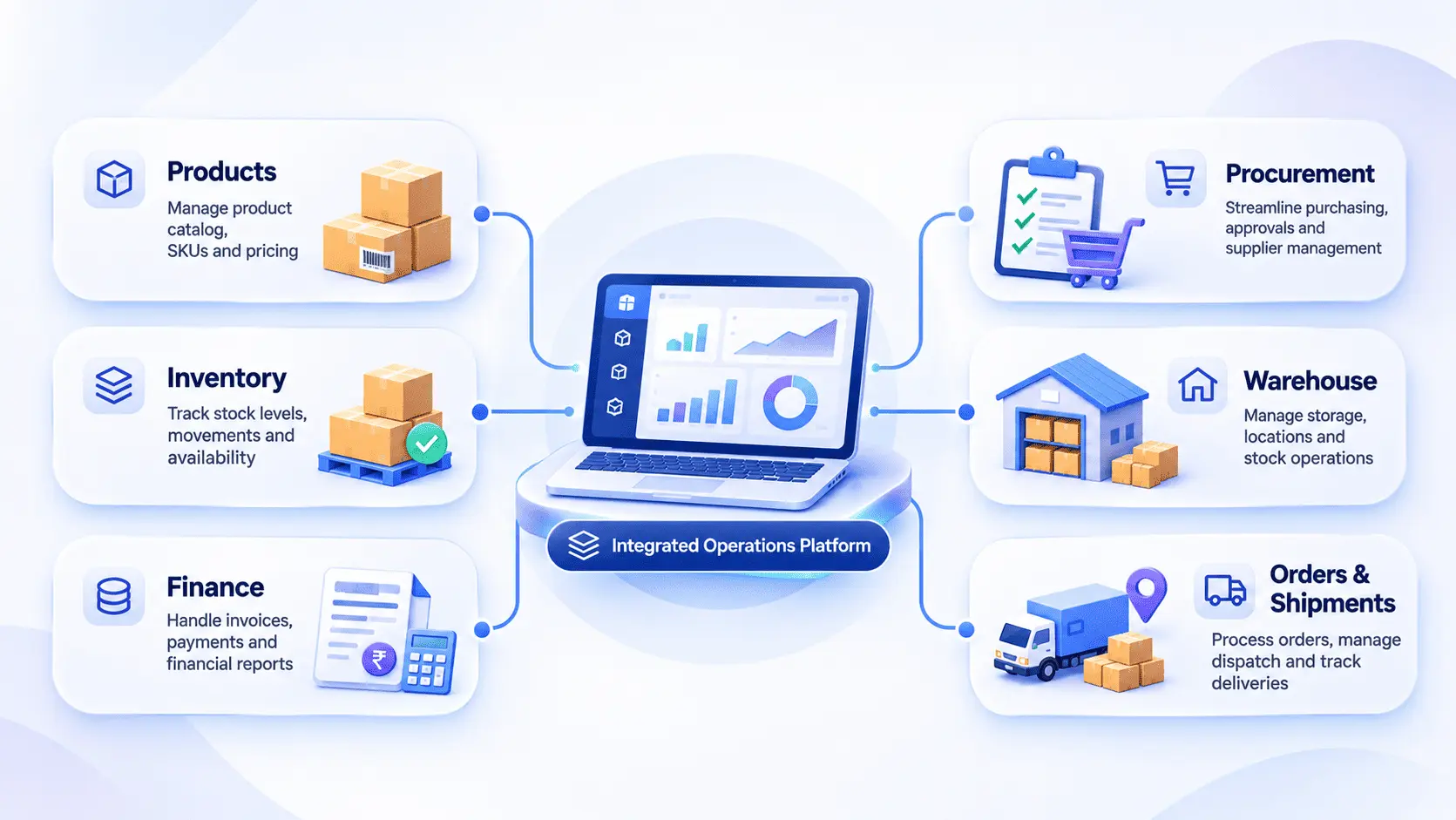
Understanding the Requirements Behind the Platform
The business requirements covered more than basic stock management. The system had to account for the information created at different stages of purchasing, receiving, storing, and selling products.
Disconnected product and inventory information
Product details are used in purchasing, stock management, and order processing. The application needed consistent product records, including categories, types, units, measurements, and identification information.
Purchase records and invoice management
The business needed to maintain company and factory details, purchase transactions, and associated invoices. These records needed a proper structure so users could refer to the relevant purchase information without maintaining disconnected documentation.
Tracking payments against purchase invoices
An invoice record does not tell the complete financial story. The business also needed to record payments and see the amount still outstanding. Administrators required a consolidated view of invoice values and payments, including company-wise and factory-wise information.
Keeping track of incoming shipments
Shipment management required attention to quantities, not just shipment dates. Related amounts. Previous shipment records also needed to remain available.
Maintaining accurate warehouse records
Warehouse personnel needed dedicated functions for incoming stock and stock counting. They also required product-wise quantity information to maintain and verify inventory records.
Making stock information available to sales teams
Sales users needed to check product availability and create orders with the required quantities. They also needed to follow orders through their different statuses.
Managing access across departments
The platform served users with different responsibilities. Administrators needed wider access, while sales and warehouse teams required access to their respective business functions.
Our Approach
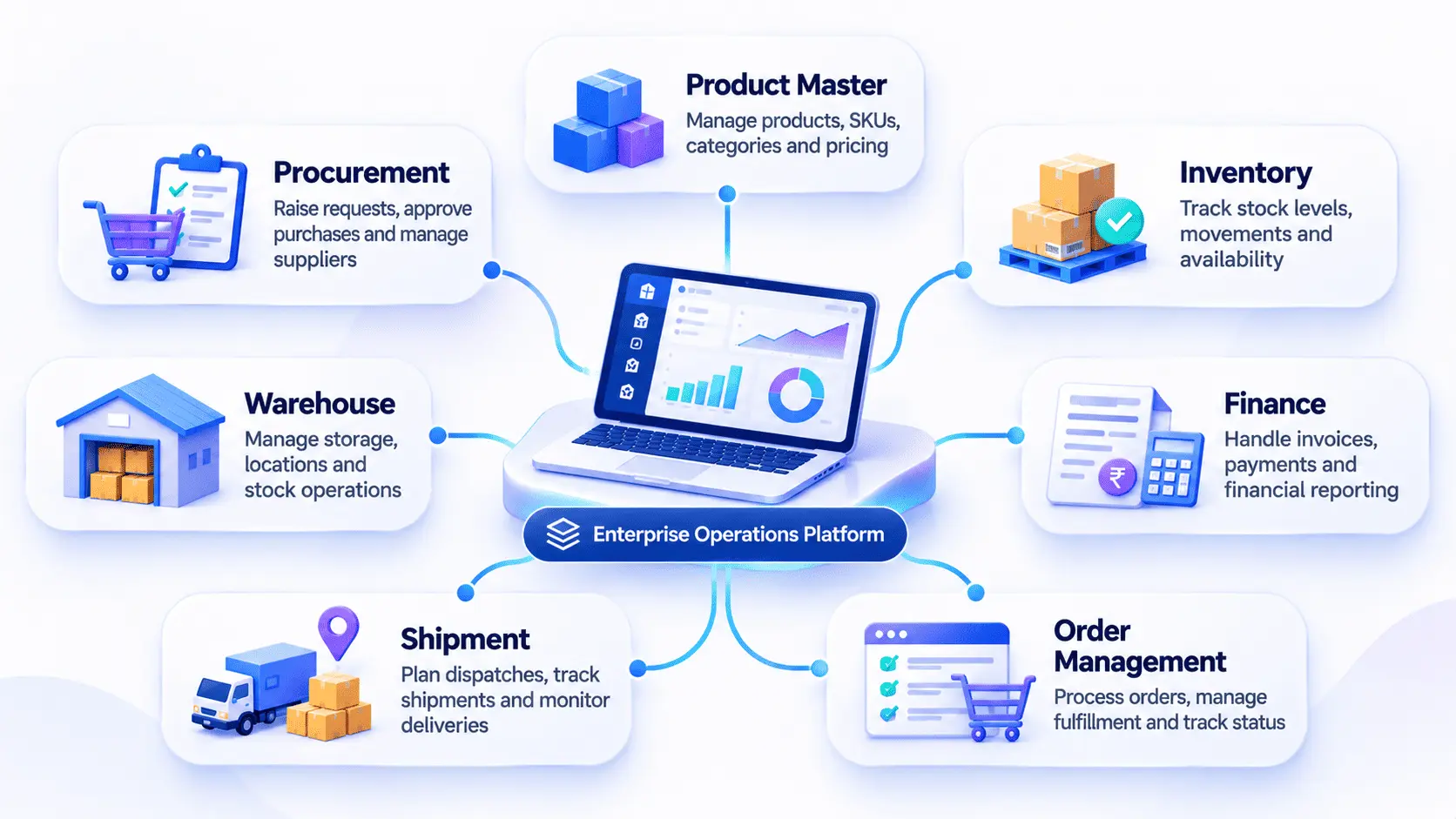
Planning the Application Around the Flow of Business Information
We approached the project by first organizing the requirements according to how the business handled its records. The application was developed using Microsoft's .NET technology, supported by our experience in ASP.NET and .NET development services.
Product information became the common reference for inventory and order-related activities. Purchase management handled company, factory, and transaction details. Invoice management maintained the financial documents and payment records associated with purchasing.
Shipment management addressed another part of the process. It maintained information about goods loaded, received, and still pending. Inventory management covered product-wise stock, incoming stock entries, and stock counts. Order management gave sales users the functions needed to create and monitor orders.
We also planned access around the three main user groups. Administrators needed a wider view of the application. Sales users needed product availability and order functions. Warehouse users needed stock information and inventory-related operations.
The development focused on keeping these functions within one application while giving each module a clear responsibility.
Solution Overview
One Application Covering the Main Inventory and Procurement Functions
Rushkar developed the platform using .NET, Microsoft SQL Server, and Microsoft Azure. The application brings the following business functions together:
Product Management
Maintains products, categories, types, units, measurements, and barcode-related identification information.
Purchase Management
Maintains company and factory records, purchase transactions, and their associated invoices.
Invoice and Payment Management
Stores purchase invoice information and payment records, with visibility into paid and outstanding amounts.
Shipment Management
Records shipment references, dates, quantities, loaded goods, received goods, pending quantities, and shipment history.
Inventory Management
Provides product-wise stock information, remaining quantities, stock records, stock-in entries, and stock counts.
Stock Monitoring
Provides visibility into low-stock products and slow-moving inventory.
Order Management
Supports order creation and the management of pending, confirmed, and completed orders.
Core Features & Functional Capabilities
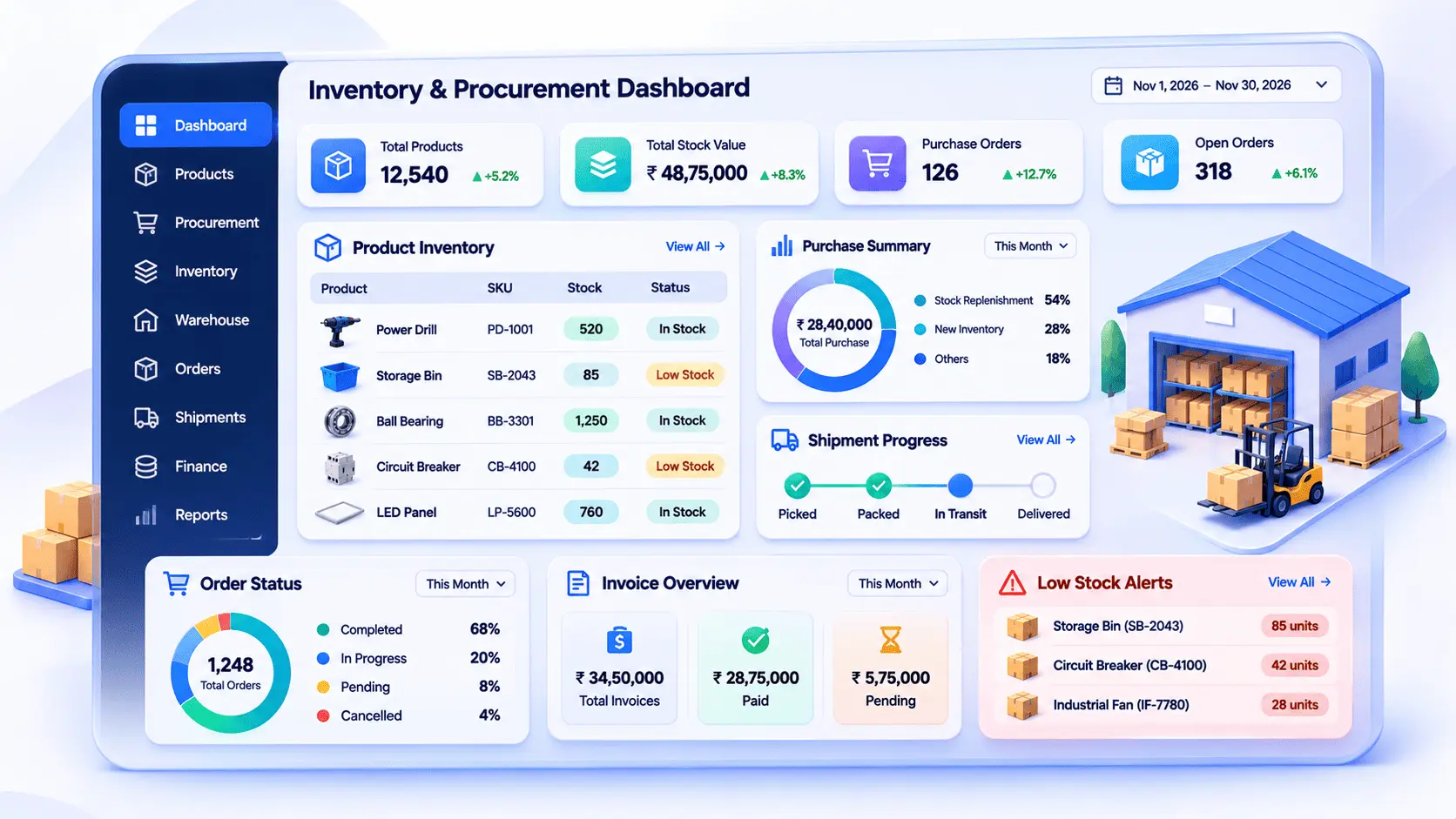
Features Developed for the Platform
01
Dashboard and Business Overview
The dashboard provides access to relevant management information and application modules. Administrators can review operational records across the platform. The invoice dashboard presents total invoice amounts, payments received, outstanding balances, and company or factory-wise financial information.
02
Product and Master Data Management
The product module maintains the information used by the other business functions. It includes product creation, categories, product types, units, and measurements.
Barcode-related product identification information is also supported. Keeping these details in a common module gives purchasing, inventory, and sales users a consistent product reference.
03
Purchase and Procurement Management
The purchase module maintains company and factory information along with purchase transaction records. Users can associate purchase invoices with the relevant transactions.
This creates a structured record of purchasing activities and provides a reference for invoice and payment management.
04
Purchase Invoice Management
Users can maintain purchase invoice records and their associated information. Company or factory associations help organize invoices according to the relevant business records.
The module provides a common place to maintain purchase-related financial documentation.
05
Invoice Payment Tracking
Payment records can be maintained against purchase invoices. The system provides visibility into the amount paid and the remaining outstanding balance.
The dashboard brings these figures together through total invoice amount, total payment amount, and outstanding balance. Administrators can also review the financial overview by company or factory.
06
Shipment Management
The shipment module maintains invoice references, shipment dates, and quantity details. Users can record loaded quantities and track how much has been received and how much remains pending.
The system also maintains received and pending goods amounts, shipment status, and historical records. This gives users a reference for reviewing current and previous shipment information.
07
Stock and Inventory Management
The inventory module provides product-wise stock information and remaining quantities. Stock records help users review inventory details, while the related warehouse functions support stock entry and verification.
08
Stock-In Management
Warehouse users can maintain incoming stock records with product and quantity information. These entries form part of the inventory records used by the business.
09
Stock Counting
Stock-count functionality supports physical inventory verification. Users can maintain product-wise quantities and update stock-count records during inventory checks.
10
Low-Stock and Slow-Moving Stock Monitoring
The platform provides separate visibility into low-stock products and slow-moving inventory.
Low-stock information helps users identify products with limited remaining quantities. Slow-moving stock information helps bring products with lower movement to the attention of the team for review.
11
Order Management
The order module supports the creation and tracking of orders. Sales users can enter product and quantity information and maintain orders through the available stages:
- Create Orders
- Pending Orders
- Confirm Orders
- Completed Orders
This gives the sales team a defined way to follow order progress within the application.
User Roles & Access Management
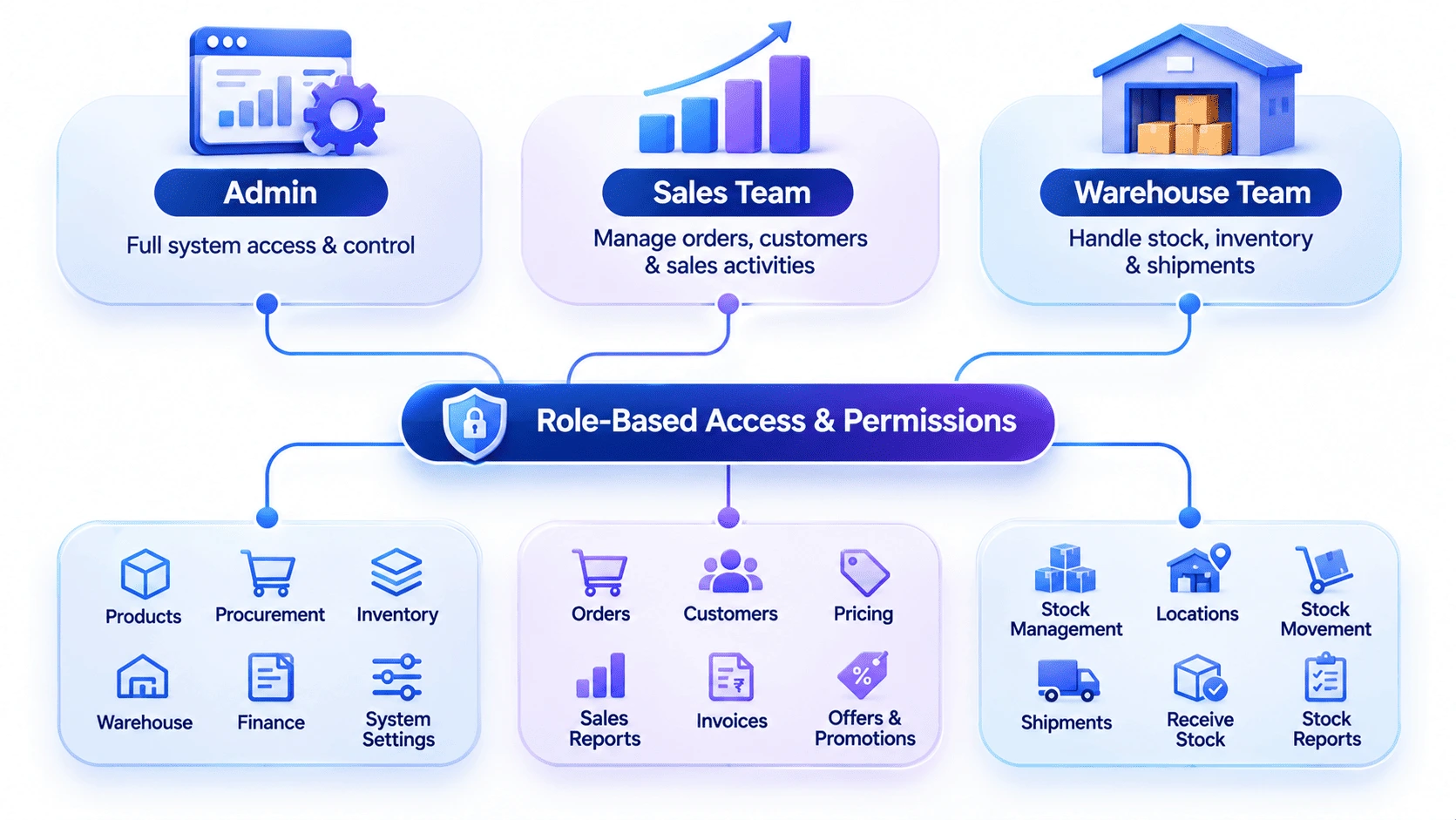
Different Permissions for Different Teams
The platform uses JWT authentication and role-based authorization to manage user access. The permission structure is based on the responsibilities of each team.
1. Admin
Administrators have access to the wider management functions, including:
User creation, management, and permission assignment.
Product and master data management.
Procurement and purchase records.
Inventory and warehouse-related modules.
Purchase invoices and payment information.
Shipment and order management.
Dashboards and reporting.
2. Sales Team
Sales users have access to the functions needed to work with products and orders:
View relevant product information.
Check stock availability.
Create orders with product and quantity details.
Monitor order status.
3. Warehouse Team
Warehouse users work with inventory-related functions:
View warehouse stock information.
Access product and quantity details.
Maintain stock-in records.
Perform stock-count activities.
This arrangement allows each team to work within its assigned area while administrators retain broader access to the application.
Technology Stack
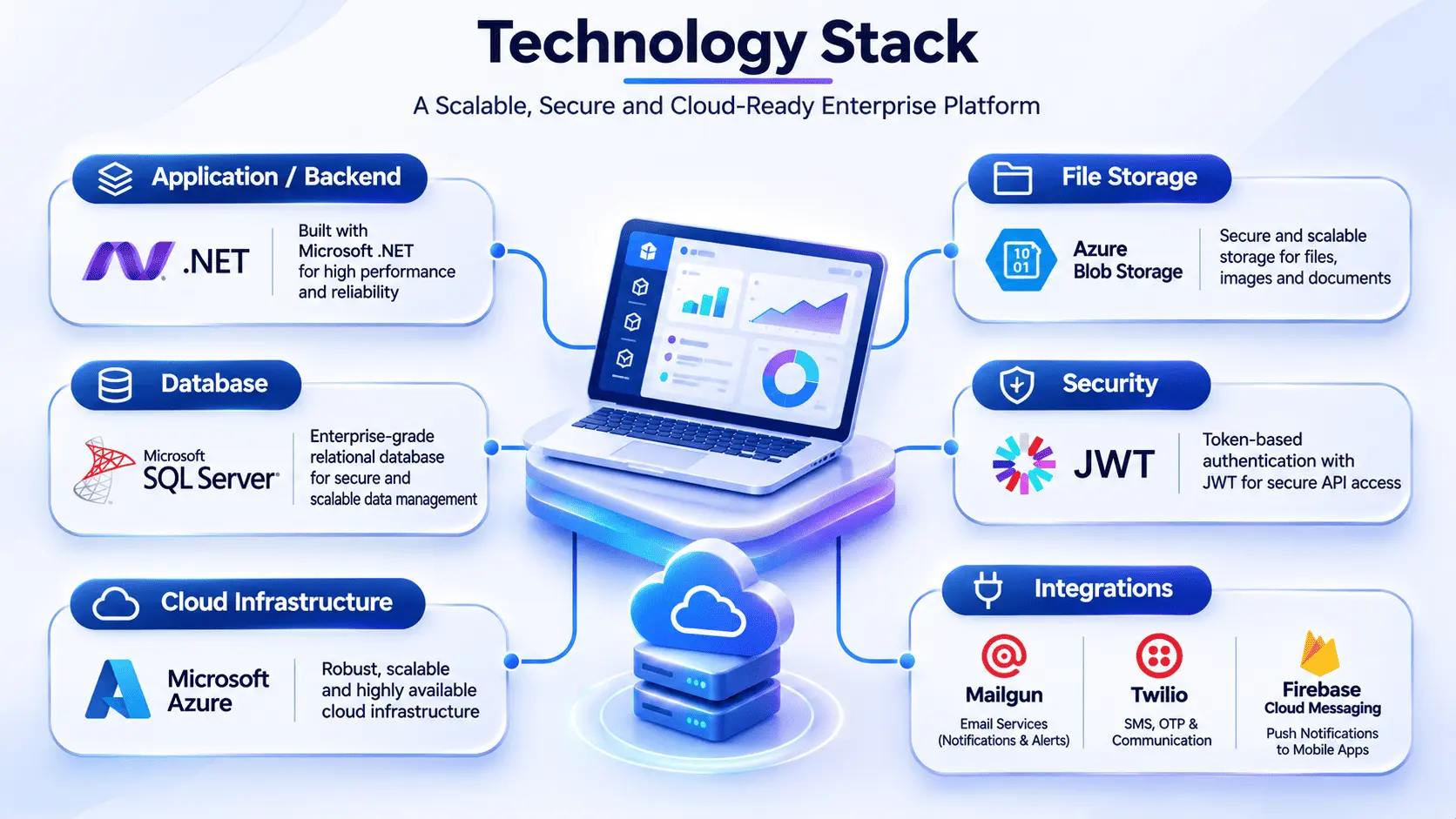
Technologies Used in Development
| Technology |
Implementation |
| .NET |
Backend application development |
| Microsoft SQL Server |
Database management |
| Microsoft Azure |
Cloud infrastructure |
| Azure Blob Storage |
File and business asset storage |
| JWT |
Authentication |
| Role-Based Authorization |
User permissions |
| Mailgun |
Email communication |
| Twilio |
OTP delivery and verification |
| Firebase Cloud Messaging |
Push notifications |
System Architecture
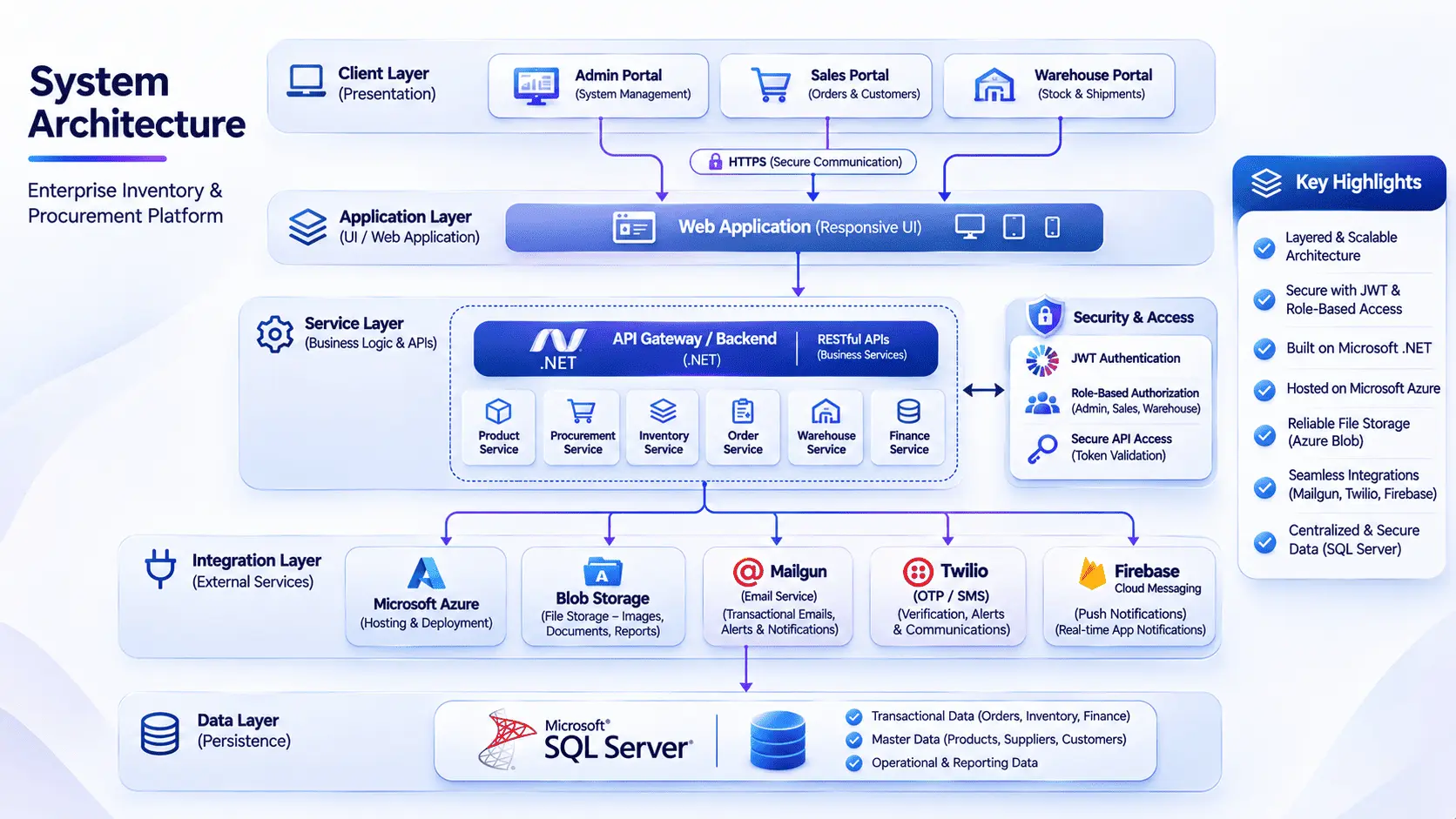
Connecting Application Logic, Business Records, and Cloud Services
The platform follows a centralized application architecture. Users interact with the available business modules through the application interface. Backend services process requests and communicate with the database and supporting services.
Application Layer
Provides access to the dashboard and modules for products, purchasing, inventory, warehouse operations, invoices, shipments, and orders.
Backend: .NET
Handles application requests, business logic, data processing, and validation. It also manages communication with the database and connected services. Businesses planning similar applications can also hire dedicated .NET developers from Rushkar for custom development requirements.
Authentication and Authorization
JWT supports user authentication, while role-based authorization controls access to the available application functions. This allows the system to provide different permissions to administrators, sales users, and warehouse personnel.
Database: Microsoft SQL Server
Stores the structured application records, including users, roles, products, master data, purchase transactions, stock information, invoices, payments, shipments, and orders.
Cloud Infrastructure: Microsoft Azure
Provides the cloud infrastructure used to host and operate the platform.
File Storage: Azure Blob Storage
Handles uploaded files and supports business assets, including product images and other associated documents.
Communication Services
Mailgun handles transactional email communication.
Twilio supports OTP delivery and verification.
Firebase Cloud Messaging handles push notification delivery.
Each technology has a defined role within the application, covering business processing, data storage, cloud infrastructure, access management, and communication.
Business Benefits & Value Delivered
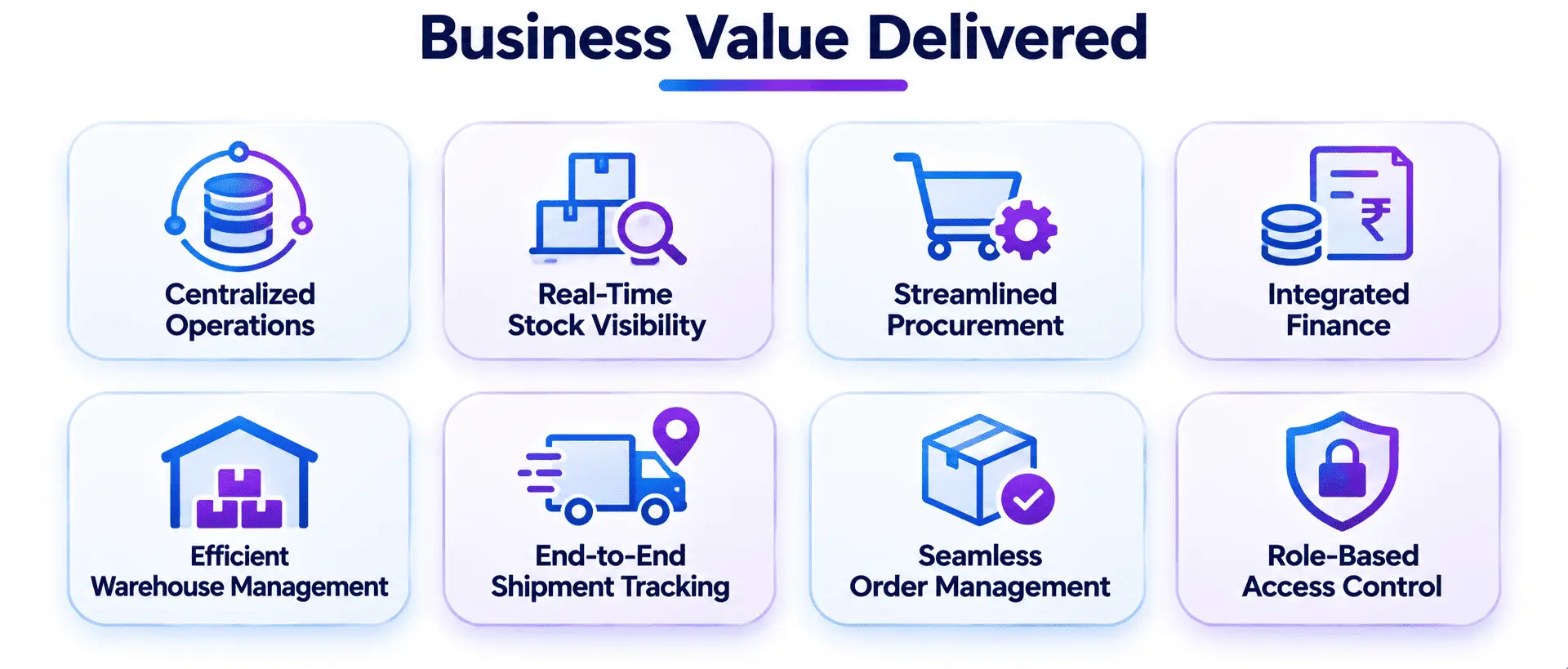
What Changed With a Centralized Management System
The platform gives the business one application for maintaining records that are closely related but serve different operational purposes.
Purchase and financial records are easier to review.
Purchase transactions, invoice details, and payment records are maintained within connected management modules. Administrators can check total invoice amounts, payments, and outstanding balances through the dashboard.
Incoming goods have clearer records.
Shipment information includes loaded, received, and pending quantities. Users can refer to shipment history instead of relying only on current shipment details.
Warehouse teams have dedicated inventory functions.
Stock visibility, stock-in entries, and stock counts are available within the same application. This gives warehouse personnel a defined place to maintain inventory records.
Sales users can check stock before processing orders.
Product availability information is accessible alongside order creation and status management. This helps connect sales activities with warehouse inventory information.
Administrators have a wider operational view.
Product, purchase, invoice, payment, shipment, and order information can be reviewed through the relevant management modules.
Access is better organized.
Different permissions for administrators, sales staff, and warehouse teams keep the application aligned with their respective responsibilities.
Project Impact
A Centralized Application for Inventory and Procurement Management
Rushkar delivered a web-based platform that brings product management, purchasing, invoice payments, shipment records, warehouse stock, and order processing into one application.
The project addressed the business requirement for maintaining these activities through structured modules rather than treating every operational record separately. Companies planning a similar application can learn more about our software development engagement process, from requirement discussions to project execution.
Administrators can manage the wider application and review financial and operational information. Sales teams can access product availability and manage orders. Warehouse teams can maintain stock-in and stock-count records.
The platform also provides specific visibility into invoice balances, shipment quantities, low-stock products, and slow-moving inventory.
The completed solution establishes a shared digital foundation for the business's inventory and procurement activities. No verified numerical improvements in cost, processing time, or stock accuracy were provided, so the project impact is described through the delivered functionality rather than estimated performance figures.
Frequently Asked Questions (FAQs)
What was developed in the Smart Inventory & Procurement Platform project?
+
Rushkar developed a web-based enterprise application for managing products, purchase transactions, invoices, payments, shipments, warehouse stock, and orders. It also includes role-based access for administrators, sales teams, and warehouse personnel.
How does the platform handle purchase and invoice management?
+
The application maintains company and factory records, purchase transactions, and associated invoices. It also supports invoice payment records and provides visibility into total invoice amounts, payments, and outstanding balances.
Can the system track incoming shipments?
+
Yes. The shipment module maintains invoice references, dates, loaded quantities, received quantities, pending quantities, shipment amounts, and historical records.
What warehouse inventory functions are included?
+
The platform includes product-wise stock information, remaining stock visibility, stock-in records, stock counts, and low-stock and slow-moving stock monitoring.
Can sales teams access warehouse stock information?
+
Sales users can view relevant product information and stock availability before creating orders. Warehouse users have separate access to stock-in and stock-count functions.
Which technologies were used to build the application?
+
The application uses .NET, Microsoft SQL Server, and Microsoft Azure. Azure Blob Storage supports file storage. JWT and role-based authorization manage access, while Mailgun, Twilio, and Firebase Cloud Messaging support communication requirements.
Can Rushkar develop inventory management software for specific business workflows?
+
Yes. Rushkar Technologies develops custom inventory, procurement, warehouse, and order management applications based on business requirements. The modules and access structure can be planned around the processes a company needs to manage.
Looking for Custom Inventory & Procurement Software?
Build a System Around the Way Your Business Manages Stock and Purchases.
Managing inventory involves several connected activities. Purchase records, invoice payments, incoming shipments, warehouse quantities, and customer orders all need to be accounted for. A system built around these processes can give different teams a common place to maintain and access business information.
Rushkar Technologies develops custom software for businesses that need more than an off-the-shelf application. From inventory and procurement management to warehouse operations and enterprise workflows, we build solutions around specific business requirements.
Have a project in mind?
Let's discuss what your business needs.
Contact Rushkar Technologies
